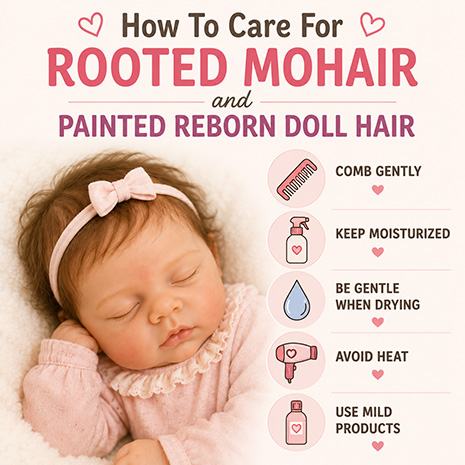
Reborn doll hair can be rooted, painted, wigged, combi-style, or bald. Each type needs different care. The wrong brush, too much water, or a tight hat can flatten mohair, frizz synthetic hair, or rub painted details.
The safest rule is to handle reborn hair less than you think you need to. Light touch, soft tools, and careful storage protect the realism better than constant styling.
First, Identify The Hair Type
Before brushing or cleaning, work out what kind of hair your doll has:
- Rooted mohair: fine natural fiber inserted into the head, often used for realistic newborn hair.
- Painted hair: hair detail painted directly onto the scalp, with no brushing needed.
- Combi hair: painted base with some rooted strands for texture.
- Synthetic rooted hair: doll hair fiber that can be thicker or shinier than mohair.
- Wigged hair: a full wig attached to the head, more common on some toddler-style dolls.
- Bald head: no styling required, but the scalp still needs paint protection.
If you are unsure, compare your doll against the reborn doll hair types guide before doing anything with water or a brush.
Rooted Mohair Care Routine
Rooted mohair is beautiful because it can look soft, wispy, and newborn-realistic. It is also delicate. Treat it like a fine fiber, not like a child's play wig.
Use this routine:
- Lay the doll on a soft towel or blanket.
- Lightly mist the hair with distilled water or plain water if the artist allows it.
- Use a soft baby brush, soft toothbrush, or mohair-safe brush.
- Start at the ends and work slowly toward the scalp.
- Brush in the direction the hair was rooted.
- Use your fingers to shape wisps instead of dragging the brush repeatedly.
- Let the hair air dry naturally.
Do not soak mohair. Do not scrub the scalp. Do not use heat tools. Do not pull tangles hard. If the doll has fragile rooting, repeated styling can cause shedding.
What To Avoid With Mohair
- Human shampoo unless the artist specifically recommends it
- Conditioner, oils, gel, hairspray, mousse, and detangler
- Hair dryers, curling irons, straighteners, and heated brushes
- Tight hats, rough blankets, and high-friction pillows
- Brushing dry tangles aggressively
- Letting children restyle the hair like a play doll
If the mohair looks dry or frizzy, do not add product first. Start with a very light mist and gentle shaping. If the doll is artist-made, follow the artist's care card before trying anything else.
Painted Hair Care
Painted hair is the easiest hair type to maintain because there is nothing to brush. It is also one of the best options for child gifts, frequent dressing, and buyers who do not want shedding or styling maintenance.
The care routine is simple:
- Do not brush painted hair.
- Keep hats and headbands soft and loose.
- Avoid rubbing the scalp during dressing.
- Use a soft dry cloth for dust, not a wet scrub.
- Keep the head away from ink, dye, makeup, and harsh cleaners.
Painted hair can look realistic when the strokes, direction, and hairline are detailed. It is not a downgrade for every buyer. For a child or low-maintenance gift, painted hair may be the better choice.
Combi Hair Care
Combi hair needs the most careful balance. The painted base should not be rubbed, and the rooted areas should not be over-brushed. Use the mohair routine only on the rooted parts, and avoid wetting painted areas more than necessary.
When dressing a combi-hair doll, protect the head from tight neck openings. Choose wrap tops, button fronts, or wide collars so fabric does not drag across the paint and rooted strands.
Synthetic Hair And Wigs
Synthetic hair can handle slightly more shaping than fine mohair, but it can still frizz or kink if brushed roughly. Use a soft brush, start at the ends, and avoid heat. If the doll has a wig, do not soak the cap unless the maker's instructions allow it.
For toddler-style dolls with longer hair, braid loosely for storage or use a silk-like cloth under the head to reduce friction. Avoid tight ponytails that create permanent bends.
Storage Tips That Prevent Hair Damage
Most hair damage happens when the doll is stored poorly, not during careful display. Keep the doll out of direct sunlight, away from damp rooms, and away from rough blankets. Do not store heavy items on the head. If using a hat, choose a soft light-colored hat and remove it sometimes so the hair does not flatten permanently.
For dolls with rooted hair, display them where the head is supported but not pressed hard into fabric. For painted hair, avoid dark hats and headbands that may transfer dye.
Best Hair Type For Different Buyers
- Collector realism: rooted mohair or combi hair can look the most lifelike.
- Child gift: painted hair or very secure short rooted hair is easier.
- Low maintenance: painted or bald dolls are best.
- Photo styling: rooted hair gives more softness and movement.
- Budget shopping: compare the whole doll, not just hair type. A well-painted head can beat poor rooting.
If hair maintenance feels like too much work, choose painted hair. If you love styling and newborn realism, choose rooted mohair but accept that it needs careful handling.
For full doll care, read how to care for a reborn doll and how to clean reborn dolls. If you are still choosing, compare hair type, size, and body style in the reborn doll shop.
Frequently Asked Questions
Yes, but only gently. Lightly mist the hair, use a soft brush, start at the ends, and avoid pulling or brushing the scalp aggressively.
Do not wash reborn doll hair unless the maker's care instructions allow it. Rooted mohair usually needs light misting and shaping, not soaking or shampooing.
Painted hair is better for low maintenance, child gifts, and easy dressing. Rooted hair is better for buyers who want softer realism and are willing to care for it gently.
Reduce friction, avoid heat and styling products, mist lightly when needed, brush gently from the ends, and store the doll without pressure on the hair.